
Start a Zionsville Residents Directory Search
A useful search begins with the clue in hand. For a street address, Boone County Pictometry GIS and the Assessor's property-record card route identify the parcel and owner fields. For a name, Indiana Voters, Indiana MyCase, the marriage-license lookup, professional-license verification, and business filings each answer a different question. For an older person or household, Hussey-Mayfield Memorial Public Library, SullivanMunce Cultural Center, Lebanon Public Library, newspapers, directories, and census material form the stronger trail.
No official source lists every person who lives in Zionsville. A parcel roll identifies an owner, not every occupant. A court index identifies a party in a case, not necessarily a current resident. The sound approach records the role, date, spelling, and keeper of each result before comparing it with a second source.
- Decide whether the known clue is a name, address, ZIP code, record type, or historical year.
- Use the official index that accepts that clue and note its coverage and access limits.
- Save the exact name, source role, date, parcel number, case number, or instrument reference.
- Confirm the match in another official record or in a dated library collection.
- Ask the proper custodian for a specific record when the needed file is not online.
Who Keeps Zionsville Residents Directory Records
Zionsville records are split by custody. The Town receives requests for its own planning, meeting, finance, police, and other municipal files. Boone County keeps deeds, parcel records, court and marriage material, election records, and local vital records. Indiana agencies run the statewide court, voter, license, custody, and vital-record routes. Sending a request to the office that created or holds the record saves a referral. Address-by-address methods are covered in the Zionsville street directory.
Boone County Assessor
Boone County Courthouse
Lebanon, IN 46052
County office route
Boone County Clerk
212 Courthouse Square
Lebanon, IN 46052
765-482-3510
Read the Boone Parcel Map Before Guessing
The Boone County Pictometry GIS accepts owner, address, and parcel clues. Its map can move from one result to nearby parcel shapes, aerial views, and location tools. That makes it the strongest first stop when the clue is a Zionsville property rather than a person. The physical or situs address must still be kept apart from an owner's mailing address and from the postal city printed on a notice.
The official GIS view shows why map fields need labels instead of assumptions.
A parcel match supplies a State ID or parcel reference that can be carried into an Assessor card, sales disclosure, Recorder search, or focused records request.
Parcel. A mapped tract identified by the county for assessment and land-record work. It does not identify every person living there.
Zionsville Deeds Run Through a Separate Index
The Boone County Recorder keeps deeds, mortgages, releases, liens, plats, and other recorded instruments. Its online route points to Doxpop, where a researcher works from a party name, document type, instrument reference, or book and page when available. The county page contains a coverage conflict: it gives earlier start dates in one statement than the Doxpop access statement gives. Treat either boundary as a reason to call the Recorder, not as proof that an older deed does not exist.
The Recorder's records-lookup page identifies the keeper and the online path.
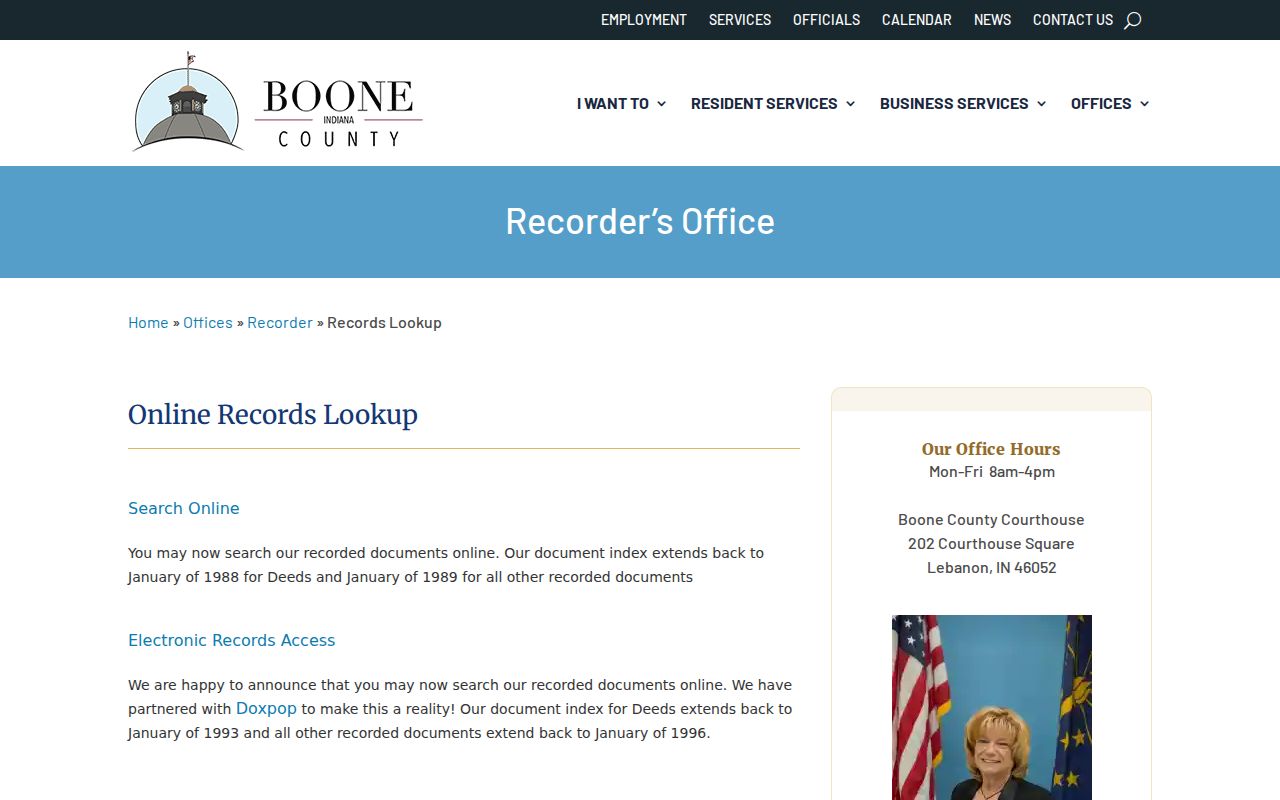
Use the index entry to request the instrument image or a certified copy from the office when the document itself matters.
Use Indiana Voters as a Narrow Status Check
Indiana Voters asks for first name, last name, date of birth, and county. Select Boone County for a Zionsville search, preserve the exact spelling entered, and do not treat a nonmatch as proof that a person is absent. A changed registration, confidentiality protection, spelling variation, or wrong county can all affect the result. The portal is useful for the registered voter, polling-place, and ballot questions it is designed to answer.
The official Indiana Voters portal displays the proper status-check route.
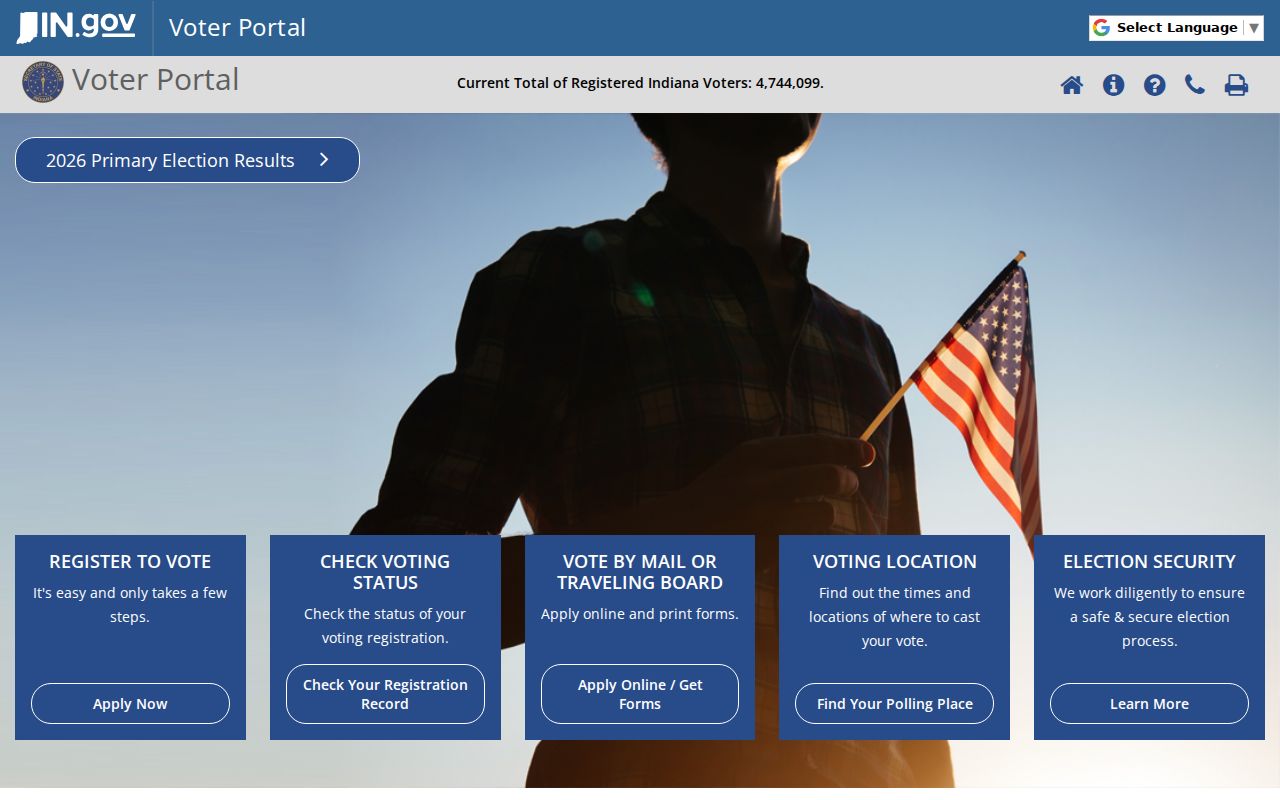
Bulk computerized voter information follows a separate county request and certification process, with statutory limits on use and confidential-address protections.
Compare Current Zionsville Residents Directory Sources
Each current source covers a defined role. Combining them can distinguish an owner from a voter, court party, licensed professional, business contact, board member, or person named in a public meeting packet. The result should never be flattened into a claim that every named person currently lives at the displayed address.
| Official source | Role shown | Record keeper | Public route |
|---|---|---|---|
| Property card and GIS | Parcel owner and mailing contact | Boone County Assessor | Web instructions and GIS |
| Indiana Voters | Registered voter status | Indiana and Boone election officials | Individual status lookup |
| Recorded-document index | Grantor, grantee, and instrument parties | Boone County Recorder | Doxpop route or office |
| Indiana MyCase | Party in a public nonconfidential case | Indiana courts | Public case index |
| Town boards and meetings | Official, petitioner, speaker, or applicant | Town of Zionsville | Agenda Center and archives |
Begin with the record whose role matches the question. The full one-name verification sequence appears in the Zionsville resident lookup. Commercial people-finder tools may merge stale records and namesakes; official rolls are narrower but disclose their keeper, purpose, and date.
Narrow a Name in Indiana MyCase
Indiana MyCase indexes public, nonconfidential Odyssey cases. Search modes include case, party name, and attorney, with filters for court, status, filing dates, and related details. A broad name can exceed the system's result limit or mix several people. Start with the exact surname, then narrow by Boone County court, date range, status, or case type. Read the chronological case summary and document availability before deciding what the match means.
The MyCase public search is an index, not a complete court file.
Boone court records may also require the Clerk, especially when a document is not posted or a certified copy is needed.
Index versus image. An index points to a case or instrument. The filed image or certified copy is the underlying record and may have separate access rules.
Vital Records Set a Firm Access Boundary
Birth and death certificates are not an open Zionsville residents directory. Indiana and Boone County require identification, eligibility, and the correct request form for certified copies. State birth recording begins in October 1907 and state death recording begins in 1900. Boone County Health Department reports local birth and death availability after 1882, while earlier or missing material can require the Clerk, Indiana State Archives, a historical index, cemetery files, or newspapers.
The Indiana Department of Health Vital Records office explains the state request route.
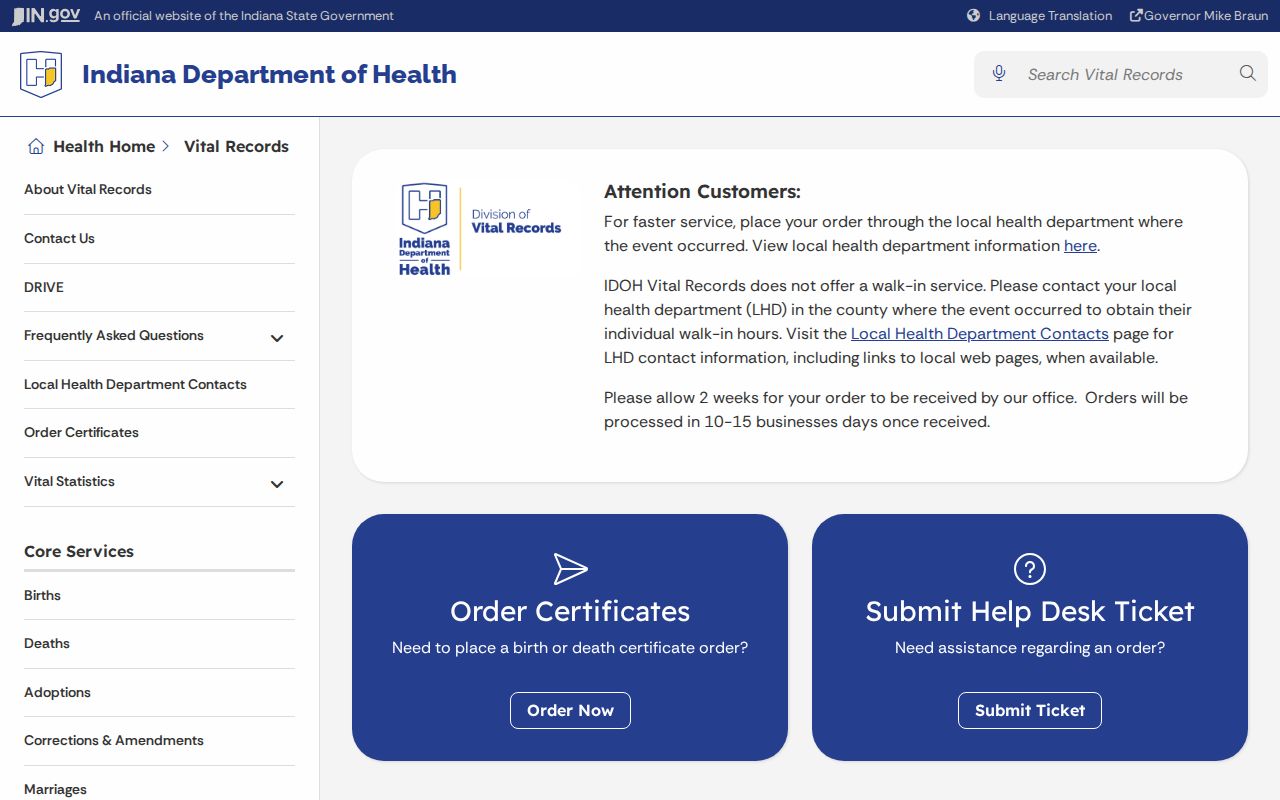
Genealogy copies are uncertified and follow their own age and proof-of-death rules, so the historical route should not be confused with a certificate order.
Ask Zionsville for a Record That Is Not Online
The Town of Zionsville Public Records Request form is for a described municipal record, not a general question or a demand that staff create a directory. Its guidance favors a sender or recipient, keywords, and a focused date range of six months or less. State the department, address, parcel, project, meeting, or document type when known. The Town can then identify responsive records or explain that Boone County or another office is the keeper.
The official Town public-records form shows the fields used to narrow a request.
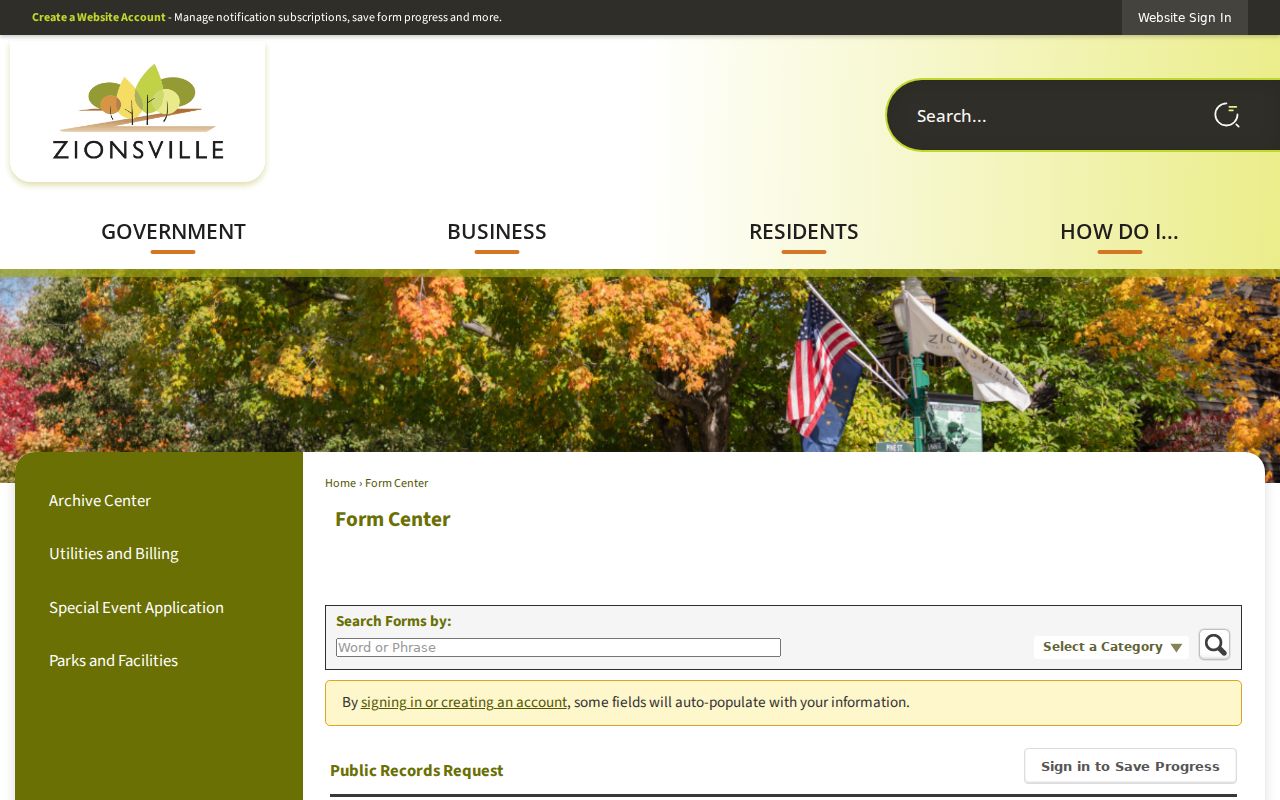
For county records, Boone County's APRA form supports inspection, paid copies, and mail or email PDF delivery when possible. Indiana Access to Public Records Act, IC 5-14-3, governs the public-record framework.
Verify a Zionsville Public Role, Not an Address
Indiana's professional-license and business systems can confirm a public role attached to a name. The Professional Licensing Agency verification route is useful for checking a credential and its status. INBiz can be searched by business name, business ID, filing number, registered agent, governing person, address, entity type, and status. These systems may show a mailing or business contact, but neither one is proof that the named person lives at that place.
The Indiana Professional Licensing Agency explains its official license search and verification options. Record the occupation, credential type, status, and source date. For a business result, label the person as an agent, officer, or filing contact exactly as the record does. That discipline prevents a Zionsville residents directory search from turning a valid public role into an unsupported residence claim.
Town boards, commissions, and committees need the same care. An agenda, packet, roster, or archive can place a person in a dated civic role. It may name an applicant, petitioner, board member, speaker, consultant, or property owner. Preserve that label, then use the meeting date and packet to understand why the name appears.
Know the Limits of Custody Records
Boone County Sheriff's Corrections page points to JailTracker, VINE, SAVIN, and office contact routes. The Indiana Department of Correction offers an Offender Locator for state custody, while federal custody has its own locator. Each covers only the population defined by that system and its update cycle. A missing result says nothing about ordinary residence and should not be stretched beyond the tool's scope.
When a live form fails to load, return to the official agency landing page or contact the keeper. The research inspection could not retain a Boone JailTracker sample, and the state locator's fields did not render in the unattended review. Those access gaps are reasons to use the named official fallback, not to substitute an unverified commercial source.
Translate Zionsville's 1935 Street Names
An old Zionsville address may point to a different modern street. The local 1935 renaming table says old Main became Pine, old Meridian became Main, and Station or Depot became Cedar. Several numbered streets also shifted. A directory entry from the 1920s therefore cannot be plotted on today's map by name alone. Keep the old spelling, subdivision or addition, lot, legal description, and nearby railroad or cross-street clues together.
This local quirk is most useful when a deed, directory, newspaper, and modern parcel appear to disagree. The SullivanMunce home-research guide, an old plat, a Sanborn sheet, and the Recorder's legal description can resolve whether the street changed, a parcel was combined, or a structure disappeared. Never force an uncertain match.
Know What Zionsville Privacy Programs Hide
Some public records are limited, sealed, redacted, or withheld. Indiana's Attorney General and Secretary of State operate address-confidentiality programs for eligible participants. Voter information has access and use rules. Juvenile, expunged, and sealed court material does not become public through MyCase. Vital records require a qualifying relationship or other eligibility for many certified copies. A missing result may reflect those limits rather than a bad search.
Use records lawfully. Keep searches tied to family history, civic transparency, property research, reconnecting, or another lawful personal purpose. Do not use an address or name trail to stalk, harass, or harm anyone.
Collect only what the task needs. Record the source and date, correct mistakes with the custodian, and avoid republishing sensitive fields merely because an index exposes them.
Follow Historical Zionsville Residents Directory Shelves
Older names move from live portals to local-history collections. Hussey-Mayfield Memorial Public Library links Indiana Legacy, Hoosier State Chronicles, Indiana Memory, and other digital research tools. SullivanMunce Cultural Center holds Boone and Zionsville genealogy, cemetery, deed, census, newspaper, family, and house-history material. Lebanon Public Library's Heritage Center adds Boone County directories, telephone books, newspapers, and vertical files. The Indiana State Library guides identify county holdings and five Zionsville Sanborn years: 1895, 1902, 1910, 1922, and 1939.
A directory entry is a dated lead. Capture the volume, year, page, spelling, occupation, address, and other household names, then test them in a deed, census, obituary, newspaper, cemetery record, or court file. Boone County's 1856 courthouse fire also explains why an early trail may require re-recorded deeds, surviving abstracts, probate, marriage, church, or cemetery material. Call ahead or make an appointment when a collection is not digitized.
Plan the visit around the era and the format. A librarian can help identify a directory run, newspaper reel, obituary file, family folder, cemetery source, or county history before a trip. SullivanMunce also describes house-history resources, Century Structure files, nearly fifty abstracts, and a large transaction spreadsheet that was intended for online use but was not located during the research inspection. Ask whether a target address or surname appears in those local files rather than assuming everything is on the web.
Historical maps solve a different part of the puzzle. A Sanborn sheet can place a building footprint, use, street label, and nearby feature in one listed year. The c.1878 map, railroad and interurban history, floodplain, former bridges, and brick village core can explain why an old route does not line up with a current parcel. Compare maps as dated evidence, not as a title opinion, and confirm any land transfer in the surviving Recorder or Auditor series.